Stearinsäure

[23]
4,06  (inkl. MwSt.)
3,41  (ohne MwSt.)
_ _
Produktcode Größe Nettopreis Gesamtpreis Menge
M-1418-0.1 100 g
3,41 
4,06 
M-1418-1 1 kg
10,45 
12,44 
M-1418-5 5 kg
33,58 
39,96 
M-1418-25 25 kg
135,23 
160,92 
Produktreferenz D-1418

Beschreibung

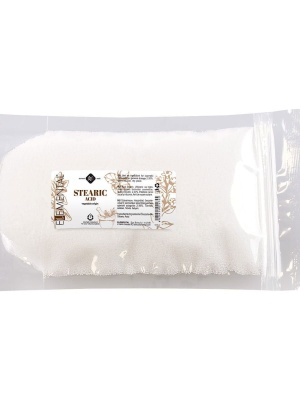
Stearinsäure - Texturgeber, Stabilisator und Konsistenzfaktor

Stearinsäure ist eine gesättigte Fettsäure, die natürlicherweise in verschiedenen pflanzlichen Buttern und Ölen vorkommt und ein unverzichtbarer Inhaltsstoff bei der Formulierung fester Kosmetikprodukte und reichhaltiger Emulsionen ist. Obwohl sie den Namen „Säure“ trägt, hat sie in der Kosmetik keine exfolierende Funktion, sondern wirkt als Verdickungs- und Opazitätsgeber. Sie ist in Cremes, Balsamen, Salben, Sticks und stiftförmigen Produkten, Seifen und Kerzen enthalten.


Inhaltsstoffe (INCI): Stearic Acid.


Technische Eigenschaften

  • Herkunft: 100% pflanzlich (aus pflanzlichen Ölen gewonnen).
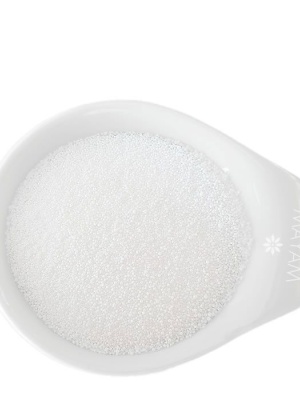
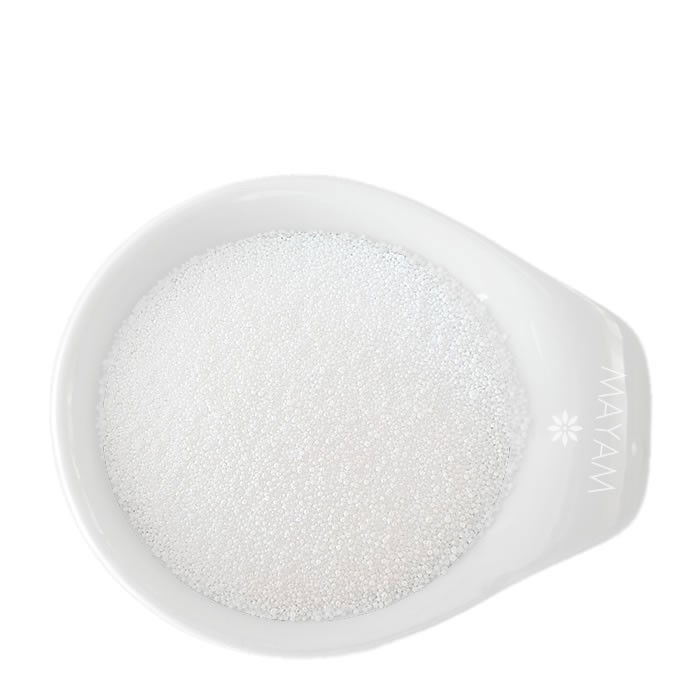
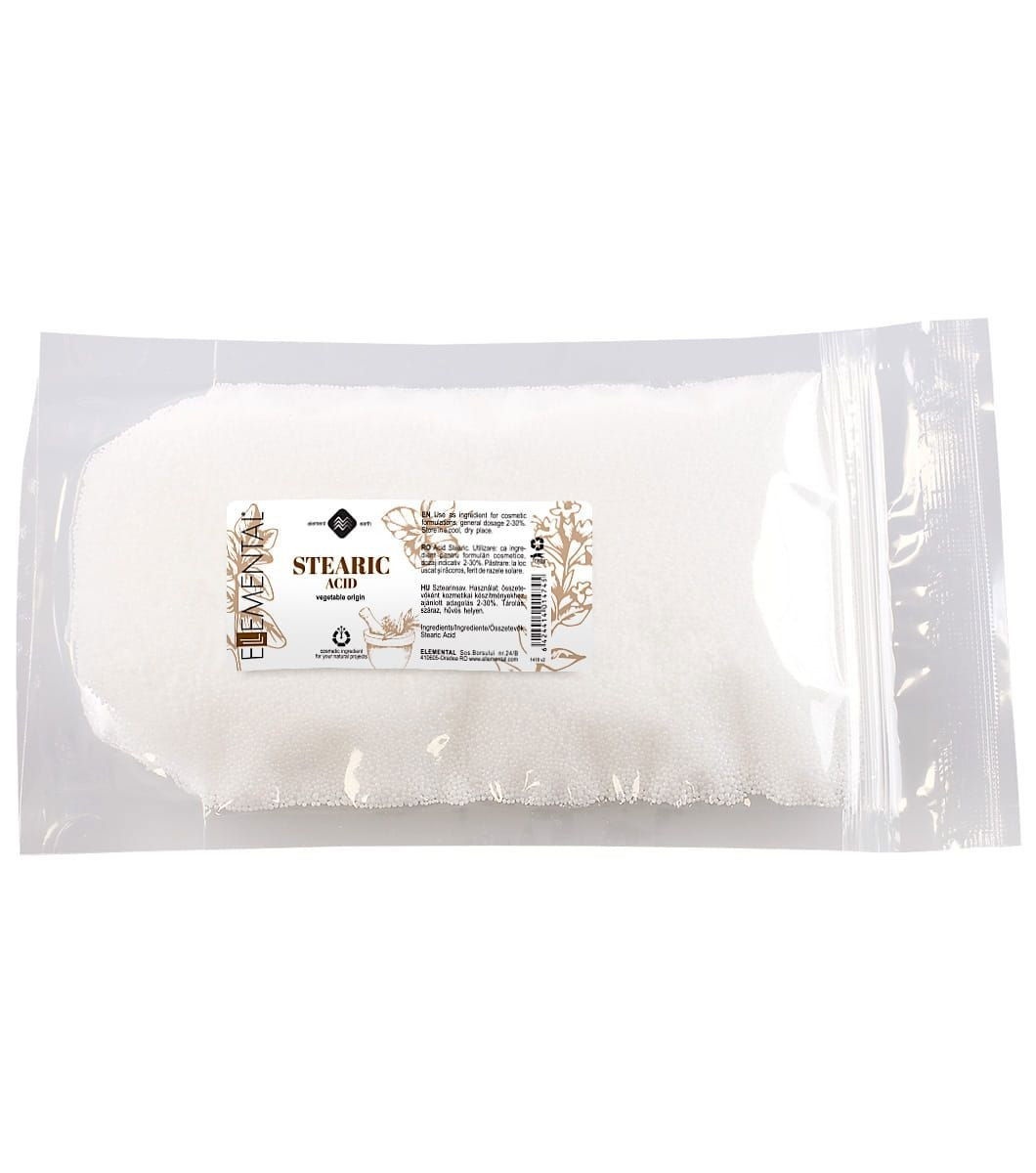
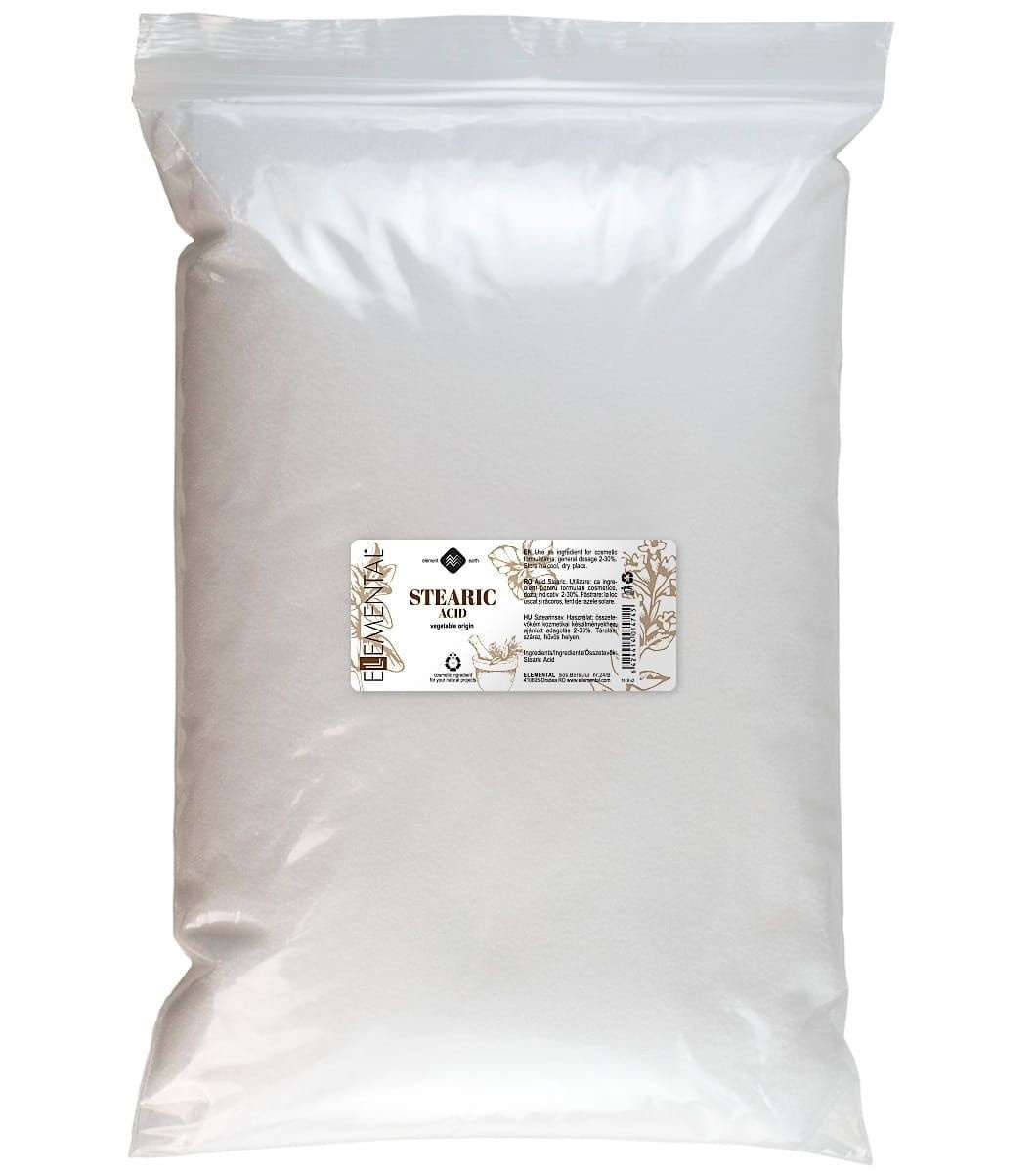
  • Aussehen: Weiße Granulate oder Flocken mit neutralem Geruch.
  • Löslichkeit: Löslich in der erhitzten Ölphase.
  • Funktion: Co-Emulgator, Verdickungsmittel, Konsistenzgeber, Opazitätsgeber.
  • Allgemein empfohlene Dosierung: 2% - 10% (bis zu 30% in Kerzen oder festen Produkten).

Informationen aus der Fachliteratur

Stearinsäure gehört aufgrund ihres Sicherheitsprofils und ihrer Vielseitigkeit zu den am häufigsten verwendeten Rohstoffen in der Kosmetikindustrie:

  • Strukturierung von Emulsionen: Die Fachliteratur beschreibt sie als hervorragenden Wirkstoff zur Bildung eines kristallinen Netzwerks in Cremes, der die Phasentrennung verhindert und eine erhöhte Langzeitstabilität bietet.
  • Sensorisches Profil: Im Gegensatz zu anderen pflanzlichen Wachsen verleiht Stearinsäure Emulsionen eine matte, nicht glänzende Textur und ein „trockenes Hautgefühl“, wodurch ein schnelles Einziehen in die Haut erleichtert wird.
  • Hautschutz: Als natürlicher Bestandteil der Lipidbarriere hilft sie, die Integrität der Hornschicht zu erhalten und die Haut vor Feuchtigkeitsverlust zu schützen.
  • Verseifung: In der Seifenherstellung ist sie für ihre Fähigkeit dokumentiert, die „Trace“ zu beschleunigen und einen dichten, stabilen Schaum zu erzeugen.

Haupteigenschaften

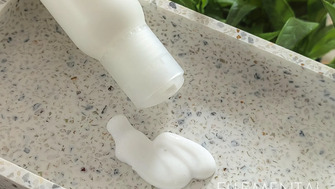
  • Konsistenzgeber: Verwandelt eine flüssige Lotion in eine dichte und reichhaltige Creme.
  • Opazitätsgeber: Verleiht kosmetischen Produkten ein weißes, mattes, cremiges Aussehen.
  • Stabilisator: Hilft, die Homogenität von Öl-in-Wasser-(O/W)-Emulsionen aufrechtzuerhalten.
  • Härtungsmittel: Erhöht den Schmelzpunkt von Lippenbalsamen und Körperbuttern und verhindert, dass sie bei hohen Umgebungstemperaturen schmelzen.

Anwendungen

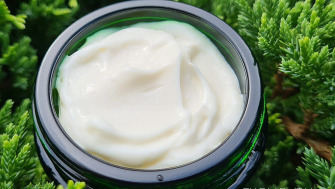
  • Feuchtigkeitsspendende Gesichtscremes und Körperlotionen.
  • Rasiercremes, Reinigungscremes.
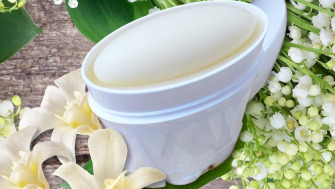
  • Lippenbalsame und Kosmetiksticks.
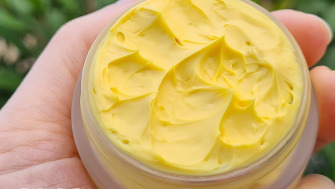
  • Körperbuttern vom Typ „Whipped Body Butter“ für eine luftige, aber stabile Struktur.
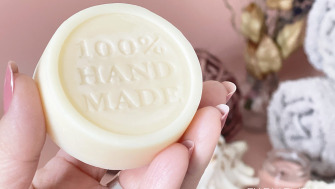
  • Natürliche Seifen im Kalt- oder Heißverfahren.
  • Pflanzliche Kerzen (verlängert die Brenndauer und erhöht die Opazität).

Formulierungsleitfaden

  • Verfahren: In die Ölphase der Zubereitung geben und erhitzen, bis sie vollständig geschmolzen ist (ca. 65-70°C). Sie ist in einem breiten pH-Bereich stabil.
  • Ellemental-Synergien:
    • Für die Hautbarriere: Mit Sodium Lactate in der Wasserphase kombinieren, um eine intensiv feuchtigkeitsspendende und schützende Creme zu schaffen.
    • Für eine samtige Textur: Mit MCT Oil kombinieren, um ein schnelles Einziehen und ein mattes Erscheinungsbild zu erzielen.

Häufig gestellte Fragen (FAQ)

Ist sie für fettige/zu Akne neigende Haut geeignet?
Obwohl sie eine Fettsäure ist, besitzt pflanzliche Stearinsäure in ausgewogenen Formulierungen ein geringes komedogenes Potenzial. Ihr „trockenes“ Hautgefühl macht sie auf Mischhaut oft angenehmer als andere schwere Pflanzenbuttern.

Kann ich Stearinsäure als einzigen Emulgator verwenden?
Nein. Stearinsäure ist ein Co-Emulgator. Sie benötigt einen primären Emulgator, um eine stabile Emulsion zu erzeugen; ihre Rolle besteht darin, Textur und Stabilität zu verbessern.


Sicherheit bei der Anwendung

Profil: Sicherer, biologisch abbaubarer Inhaltsstoff pflanzlichen Ursprungs, oxidativ stabil.
Vorsichtsmaßnahmen: Zur äußeren kosmetischen Anwendung. Im heißen (geschmolzenen) Zustand vorsichtig handhaben.
Lagerung: An einem trockenen, kühlen Ort.


Wissenschaftliche Referenzliteratur (2020-2024)

  • Ferreira, M. S., et al. (2022). Fatty acids in cosmetics: The role of Stearic Acid in emulsion stability and skin barrier support. Journal of Cosmetic Dermatology.
  • Gosh, S., et al. (2021). Effect of stearic acid concentration on the rheological properties of O/W cosmetic emulsions. International Journal of Cosmetic Science.
  • Tan, C., et al. (2023). Vegetable-derived fatty acids: A sustainable approach to texture modification in personal care. Green Chemistry Letters and Reviews.
  • Johnson, W. Jr., et al. (2020). Safety Assessment of Stearic Acid and Fatty Acids as Used in Cosmetics. Cosmetic Ingredient Review (CIR).


Einzelheiten

Produktcode
D-1418
INCI
Stearic Acid
Status
Naturkonform
Natural index
ISO 16128 - Natural origin 1.0
Zusatzstoffe
keine
Konservierungsstoffe
no preservatives
Aussehen
Flocken, Körnchen, elfenbeinfarben
Geeignet für
Kerzen, Kosmetik, Seifen
Hautpflege
Gesichtscremes, Gesichtsreiniger, Spülungen
Körperpflege
Cremes Emulsionen, Konditionierer, Körperbutter, Salben
Hygieneartikel
Deodorants, Gesichtsreiniger, Seifen
Ladung
anionisch
Löslichkeit
in Öl
Verwendung
2 - 30 %
Lagerung
an einem kühlen, trockenen Ort, vor direkter Sonneneinstrahlung geschützt
Download
TDS  |  MSDS

Rezepte mit diesem Produkt

Rezensionen

von 5 von 5 Sternen
Basierend auf 23 Stimmen
{Anzahl der Sterne
100%
{Anzahl der Sterne
0%
{Anzahl der Sterne
0%
{Anzahl der Sterne
0%
1 Stern
0%
Haben Sie dieses Produkt verwendet?
Rezension schreiben

Schreiben Sie eine Bewertung und sammeln Sie Treuepunkte im Wert von 0,40 €.

A
Adriana N.
10 Feb. 2025
Hi, unfortunately I stubbornly made a cream, which got cut off because I didn't have this acid and I guess another minus was that I didn't have a thermometer, can the composite be recovered? I have now launched with order for stearic acid.Thanks!
T
Tatiana C.
10 Jan. 2025
Comfortable product to use for thickening and stabilization With the help of stearic acid I have also prepared creamy waxes and stick deodorants and lip balms
M
Miki M.
10 Jan. 2025
I have used it in the preparation of various care products, deodorants, soaps and I was very pleased with the results.
C
Claudiu B.
10 Dez. 2024
I only use it in soaps when I want to get a higher hardness. You can feel the difference, with and without stearic acid, the soaps come out of shape more easily.
C
Claudia g.
10 Dez. 2024
Very good product, I use it in shower gels. It has good end product stability but I would have liked it to have a finer granulation to dissolve more easily.
S
Savu C.
10 Dez. 2024
Protective effect (filmogenic): Due to its structure it forms a protective film on the surface of the skin, which prevents dehydration. I like it, very good product.
A
Alina B.
10 Okt. 2024
A versatile product with multiple uses in cosmetic formulations such as body butters, deo stick uri, body creams, cleansers.
A
Alina G.
22 Mai 2024
I use it for solid deodorants, it doesn't feel oily, sticky on application. Very good!
G
Georgeta Z.
22 Mai 2024
It has so many applications: deodorants, creams, butters and lotions. It is the easiest to use emulsifier! In my experience, it can be used as the sole emulsifying agent, but testing is necessary. I kept experimenting until I found the right percentage to get stable and nice textured emulsions. I am very happy with the texture I finally got for the moisturizing body lotion: it sinks into the skin quickly and is fluffy.
V
Vasiliu I.
22 Mai 2024
has a high thickening capacity of the compositions gives consistency and helps to stabilize emulsions improves the texture of emulsions softens and smoothes the skin
M
Muntean i.
22 Mai 2024
I use it every time I make deodorant, it's wonderful.
T
T. Hoyt
21 Okt. 2025
Hi! I have been trying to use it in my deodorant, experimenting with small batches, but I have been struggling with how much to use. Would you mind sharing your ratios? Thank you!
A
Andrada S.
22 Mai 2024
I use stearic acid in formulations where I use larger amounts of oil and in soaps. So far I am very pleased with how it works with it.
M
Mihaela c.
22 Mai 2024
I use it as an ingredient for deodorant stick.Recomand is indispensable.
M
Miki M.
05 Jan. 2024
I love it and will not give it up.I use it a lot in deodorant stik which is more solid with this ingredient.
T
T. Hoyt
21 Okt. 2025
Hi, I have been making my own deodorant for a while now, but only recently started adding stearic acid. I have tried several small test batches, but I just can't seem to get my ratio of stearic acid to oil right. Would you mind sharing how much you use to your oils? Thank you!
A
Andra G.
05 Jan. 2024
I have used it to prepare different skin care products and have been very pleased with the results
G
Gabriela C.
05 Jan. 2024
It's a natural, plant-based product. It can be successfully used in the preparation of cosmetic products, providing an increase in their viscosity and stability (in the case of emulsions, conditioners, solid shampoos). It increases the hardness of candles or soaps.
B
Blaga F.
05 Jan. 2024
I use it most often in the summer, in deodorant and body butter. The texture of the products is very good, they soften harder than without strearic acid; they don't feel greasy on the skin.
M
Miki M.
05 Okt. 2023
The viscosity of the creams is better with this ingredient .I have to use it in solid hair soaps also I understand it is very good.
C
Customer E.
15 Feb. 2023
Excellent, gives the soap a rich lather. The cream gives a fine lubricity and leaves it very hydrating.
M
Mariana P.
05 Okt. 2022
I have used it, use it and will not give it up. I like to add it in the preparation of solid stick deodorants.